
Loading...
Serving Signal Hill, CA and surrounding areas. (626) 416-2675
Stop refinishing a wood deck every couple of years. Composite decking holds up under Signal Hill's coastal climate without the annual maintenance cycle - and we handle the permits.
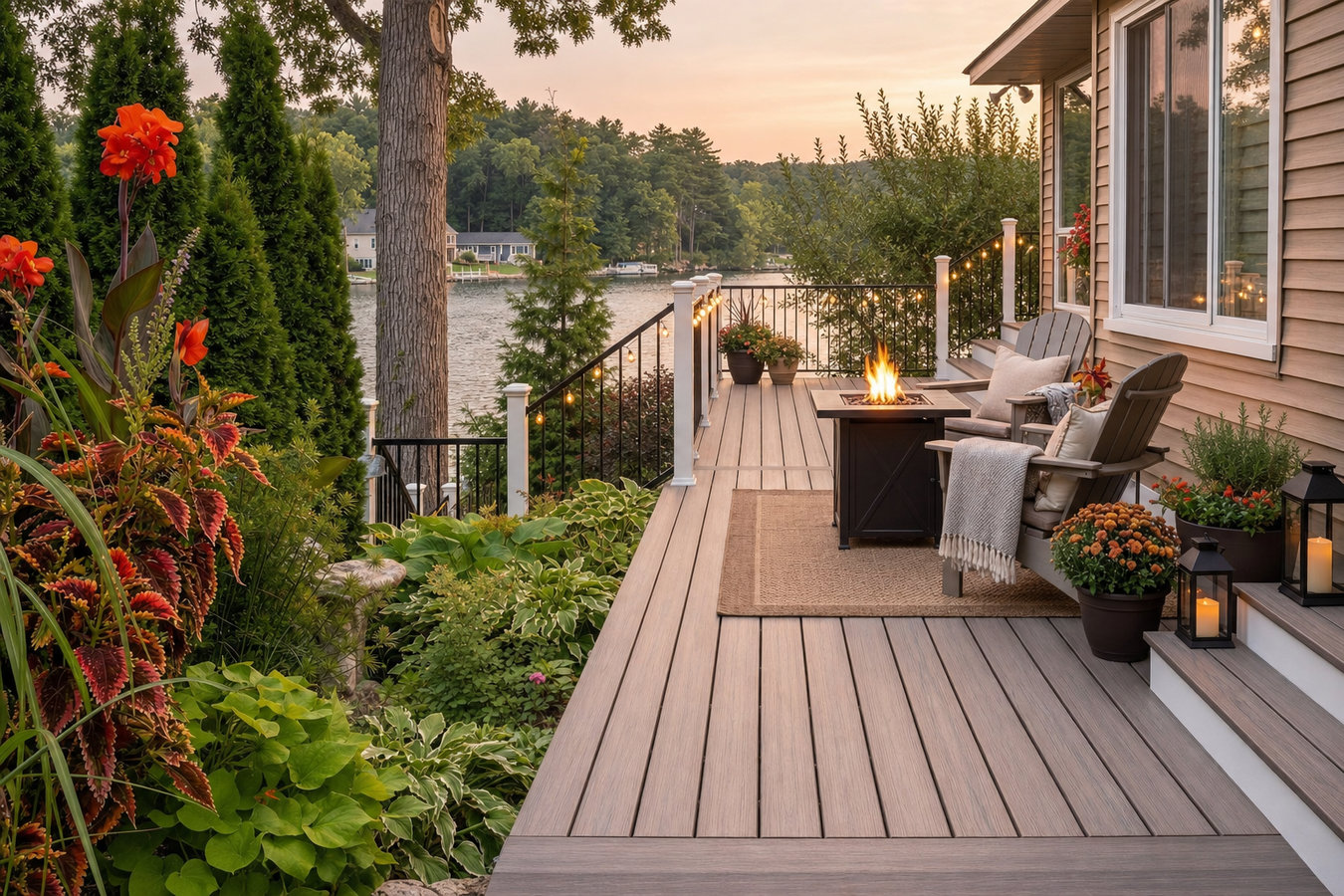
Composite deck installation in Signal Hill, CA means building a pressure-treated lumber frame and fastening composite boards on top - most standard-sized jobs wrap up in two to five days of active construction once the permit is in hand.
Composite decking is made from a blend of wood fibers and recycled plastic. Unlike real wood, it won't rot, splinter, or need to be sanded and stained every couple of years. For a home in Signal Hill - where the coastal air and nearly 280 sunny days a year accelerate wear on untreated wood - composite is often the smarter long-term choice.
If you're still deciding between composite brands or want to explore how Trex deck installation compares to other composite options, that page covers the specifics of Trex's product line and what makes it different from other boards we install.
If you're noticing rough, splintery boards or boards that have started to cup or bow, your deck is showing its age. Wood decks in Signal Hill's coastal environment tend to deteriorate faster than in drier inland cities because the marine air keeps the wood cycling between damp and dry. When the surface feels rough underfoot or looks visibly weathered, it's usually more cost-effective to replace it with composite than to keep patching and refinishing.
If you avoid your backyard because the existing deck feels wobbly, has soft spots underfoot, or just looks uninviting, that's a clear sign something needs to change. A deck that flexes or bounces when you walk on it often has structural problems underneath - not just surface wear. That's not a cosmetic fix; it's a replacement conversation.
If deck maintenance has become an annual line item in your budget, the math often favors replacement. Composite decking eliminates the recurring cost of staining and sealing, and a new installation resets the clock on structural integrity. Many Signal Hill homeowners find that the first two or three years of maintenance savings start to offset the installation cost.
Signal Hill's hillside lots often leave homeowners with yards that are hard to use because the ground isn't level. A deck built on a proper frame can create a flat, usable surface over a sloped yard - turning an awkward space into somewhere you actually want to spend time. If you're looking out at a slope and wishing you had somewhere to put a table and chairs, a deck is often the most practical solution.
We install composite decking from leading manufacturers as part of a complete project - from the pressure-treated frame up through the boards, railings, stairs, and finishing details. If you know you want a specific brand like Trex, we work with it. If you want help comparing products, that's part of the estimate conversation. We also handle deck railing installation as part of the same project so you're not coordinating separate contractors for the rails, balusters, and post caps.
Every installation includes permit submission to Signal Hill's Building Division, scheduling city inspections, and a final walkthrough where we hand you product warranty documents and maintenance guidelines. The frame goes in first, the city inspector checks it before boards go down, and the finished deck gets a final inspection sign-off before we call it done.
Any leading composite brand installed over a correctly built pressure-treated frame.
Engineered framing for Signal Hill's grade changes - level surface even when the ground beneath isn't.
Composite or aluminum railing systems matched to your board choice and HOA requirements.
Code-compliant stairs with composite treads and continuous railing - sized and placed for your layout.
We handle the Signal Hill Building Division paperwork and inspection scheduling from start to finish.
Design drawings and product specs formatted for HOA review - we time the process to run alongside the permit.
Signal Hill sits on an elevated mesa just a mile from the Pacific, which means decks here face a combination of marine air, salt-laden moisture, and intense Southern California sun. That combination breaks down wood decking faster than in drier inland cities. Composite materials handle this environment far better - the boards won't absorb moisture the way wood does, and the UV-stable surface holds color without annual refinishing. If you're choosing board color, lighter shades absorb less heat on warm afternoons, which is worth thinking about if your deck gets direct afternoon sun. The North American Deck and Railing Association notes that composite decks in coastal climates routinely outlast wood by a significant margin when properly installed.
Signal Hill is also a city with its own permit process - separate from Long Beach - and a high proportion of HOA-governed properties. Both of those factors affect how a project gets scheduled and what approvals are needed before work begins. We've worked through both processes many times here. We also serve homeowners nearby in Long Beach and Lakewood, where composite decking is just as popular given the similar coastal climate conditions.
Call or fill out the form and we'll respond within one business day. We'll ask about the space, whether you have an existing deck, and what you're hoping to use it for - just enough to know what to look for during the site visit.
We come to your home, measure the space, and assess site conditions - the slope of the yard, what the deck will attach to, and any access challenges. We walk you through composite material options and give you a written estimate within a few days.
We submit the permit application to Signal Hill's Building and Safety Division before any work begins. If your property has an HOA, we provide the drawings your association needs for review. Permit approval typically takes one to three weeks; we don't schedule your start date until all approvals are in hand.
The crew builds the frame first, passes the city's framing inspection, then installs composite boards, railings, and stairs. At the end we do a walkthrough, hand you product warranties and maintenance guidelines, and give you the final inspection sign-off documents for your records.
We respond within one business day. A written quote with no obligation - just an honest conversation about what your project will take.
(626) 416-2675Signal Hill's hillside terrain isn't a problem we work around - it's something we plan for from the first measurement. Correct post heights, properly sized footings, and a level deck surface even when the ground beneath it isn't: that's how every hillside job gets built.
We pull every required permit through the City of Signal Hill's Building and Safety Division, schedule the city's framing and final inspections, and hand you the sign-off documents at the end. You get a deck that's fully legal and fully documented before we call the job complete.
Any contractor doing deck work in California valued at $500 or more must hold an active CSLB license. We are licensed and insured - you can verify our status on the California Contractors State License Board website before you sign anything.
We've installed composite boards in Signal Hill's coastal conditions many times and know which products hold their color, stay cooler underfoot, and actually match what the manufacturer warranties promise. We help you choose based on your deck's orientation, your HOA's color palette requirements, and your budget.
The frame underneath is the most important part of any deck - you can't see it once the boards go down, which is why it matters so much who builds it. We build to the standard we'd want for our own homes.
Trex is one of the most widely installed composite brands - this page covers what sets it apart and whether it's the right fit for your Signal Hill project.
Learn MoreComposite and aluminum railing systems installed alongside your new deck or as a standalone upgrade to an existing structure.
Learn MorePermit slots and build schedules fill up fast in spring - reach out now and we'll lock in your start date before the rush.